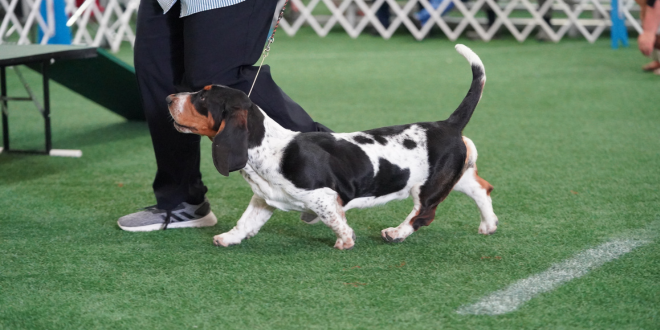
Possible Genetic Link to Intervertebral Disc Disease in Short-Legged Dogs In veterinary medicine, the term “chondrodysplasia” describes dogs with short legs (CDPA), while “chondrodystrophy” describes dogs that may have shortened legs, abnormal cartilage formation and early-onset degeneration of intervertebral discs, predisposing them to intervertebral disc disease (CDDYIVDD).
Mutations in the FGF4 gene on two different chromosomes, 12 and 18, contribute to short legs in dogs. Across breeds, dogs may carry zero, one, or two copies of the FGF4-12 and/or FGF4-18 mutations. These mutations are found frequently in many breeds.
The mutation on chromosome 18 has not been linked to any conditions other than short legs. The mutation on chromosome 12 (FGF4-12), however, has an association with Type I intervertebral disc disease (CDDY-IVDD), through the degeneration, calcification and subsequent herniation of intervertebral discs across various breeds. A multi-breed study conducted at UC Davis found that compared to dogs without the FGF4-12 mutation, those with one or two copies of the mutation are 6 to 15 times more likely than dogs without the mutation to develop IVDD, depending upon the breed.
A genetic test is now available that detects the presence of the mutation on both chromosomes 12 (short legs and CDDY-IVDD risk) and 18 (CDPA-short legs).
In the small number of Basset Hounds tested for these mutations, all have been found to carry the FGF418 mutation for short legs. The FGF4-18 mutation may be fixed within the genome – meaning that all Basset Hounds may have two copies of this mutation. The FGF4-12 mutation that increases the risk for IVDD has also been found in Basset Hounds, but it is unknown how widespread it is in the breed. In limited testing of Basset Hounds by Paw Print Genetics, almost all had one or two copies of the mutation. From a published study, of 6 Basset Hounds seen for surgical treatment of IVDD, 5 (83%) had the mutation. Although an association has been made between the FGF4-12 mutation and increased risk of IVDD, the actual IVDD risk is unknown for most breeds and for dogs that become symptomatic, multiple factors are likely involved, including genetic and environmental factors.
Unlike the diseases for which the BHCA Health Policy recommends genetic testing, the results of the testing for CDDY-IVDD risk are not determinative for IVDD. Not all dogs with the mutation are affected with IVDD, and not all dogs with IVDD have the mutation. However, IVDD is one of the more prevalent health problems in the breed and merits attention. According to the 2016 Basset Hound health survey conducted by the BHCA, 6.2% of dogs owned by BHCA members had “gone down in the rear”, indicative of IVDD.
Geneticists are interested in investigating the associated risk between FGF4-12 and CDDY-IVDD. If the risk can be better established between FGF4-12 and CDDY-IVDD for the Basset Hound, breeders may benefit from testing their hounds to implement breeding strategies to reduce the likelihood of their dogs developing CDDY-IVDD, while retaining the short-legged phenotype of CDPA from the FGF4-18 mutation. For example, breeding a dog with one copy of the FGF4-12 mutation to a dog who tests clear for this mutation provides a 25% chance that each pup may be clear for the FGF4-12 mutation.
The Basset Hound Club of America encourages dog owners to help with scientific research to understand the linkage between CDDY-IVDD and the FGF4-12 mutation by having their dogs tested.
Original: https://basset-bhca.org/wp-content/uploads/2021/09/CDDY-IVDD-for-BHCA-members-Health-Bulletin.pdf