The Future of our Sport and a Great Family Experience
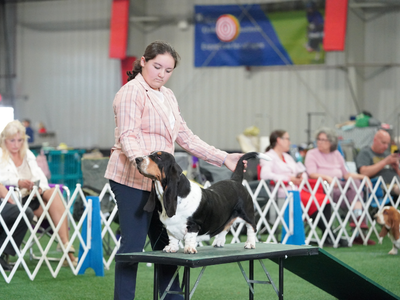
Children are an important part of the future of our breed. Junior Showmanship is a perfect vehicle for teaching them about the Basset Hound breed. In addition to learning how to present and care for the Basset Hound, they will learn patience, determination, and good sportsmanship. The quality of the dog is not judged — the Junior’s presentation skills are judged.
The sport of dogs is a great family activity and one of the best ways for families to involve their children is to allow them to compete in Junior Showmanship. This isn’t a contest about the dog — it is about learning to present the dog in the best way possible.
One of the most important things that can be done to protect the sport of purebred dogs in general, and Basset Hounds specifically, is to foster and encourage the involvement of younger participants and seek to involve a new generation of fanciers.
Once your child develops an interest in dog handling, it’s time for Junior Showmanship. Your dog isn’t the main focus in a Junior Showmanship competition — your child is. Judges look at the quality of presentation in the ring and how well the Junior handles and presents the dog in a manner appropriate for the breed.
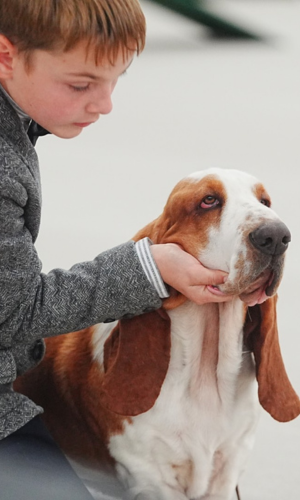
Children are an important part of the future of our breed. Junior Showmanship is a perfect vehicle for teaching them about the Basset Hound breed. In addition to learning how to present and care for the Basset Hound, they will learn patience, determination, and good sportsmanship. The quality of the dog is not judged — the Junior’s presentation skills are judged.
The sport of dogs is a great family activity and one of the best ways for families to involve their children is to allow them to compete in Junior Showmanship. This isn’t a contest about the dog — it is about learning to present the dog in the best way possible.
One of the most important things that can be done to protect the sport of purebred dogs in general, and Basset Hounds specifically, is to foster and encourage the involvement of younger participants and seek to involve a new generation of fanciers.
Once your child develops an interest in dog handling, it’s time for Junior Showmanship. Your dog isn’t the main focus in a Junior Showmanship competition — your child is. Judges look at the quality of presentation in the ring and how well the Junior handles and presents the dog in a manner appropriate for the breed.
A Brief History of Junior Showmanship
In the late 1920’s, a number of dog fanciers were led by Mr. Leonard Brumby Sr. to develop a special competition for children. The idea was that children would compete against their peers, judged on how well they presented the breed they were showing.
In 1971 the AKC granted official recognition for Junior Handler competition. The American Kennel Club now recognizes Juniors handling dogs to Performance Titles with a Certificate to mark the achievement. There is now a scholarship program sponsored by the American Kennel Club.
Juniors become ineligible to compete in Jr. Showmanship at the age of 18. In many cases, these Junior participants have gone forward to become breeders, judges or handlers. Many continue to serve the AKC or their parent club and some pursue careers related to dogs.
Junior Showmanship – Eligibility
Children between the ages of 9 and 18 may compete in Junior Showmanship. Each child must have a “Junior Number” to compete. Junior Numbers are easy to attain by emailing a request to juniors@akc.org.
Each junior must have the capability of controlling their dog at all times. The dog they show must be either owned or co-owned by the Junior or the Junior’s father, mother, brother, sister, uncle, aunt, grandfather, or grandmother, including corresponding step and half relations, or by a permanent member of the Junior Handler’s household.
The dog shown must be six months of age or older, physically sound, up to date on shots and either have an AKC or PAL number. Spayed or neutered dogs are eligible, females in season are not.
BHCA Junior Member Scholarship Program & Junior Achievement Award Application
The Basset Hound Club of America strongly encourages Junior participants. One of the ways this support is expressed is through the Junior Member Scholarship Program “In Honor of Nancy Mulligan.”
Current Junior competitors who are members of the Basset Hound Club of America should complete a Junior Member Achievement Award Application. Their achievements are recognized at the Annual Dinner at the BHCA National Specialty.
Junior Scholarship Program
Following the completion of one year of college, former Juniors may complete an application for the Junior Member Scholarship Program, which should include three years of Junior Achievement Awards. For complete details, review the guidelines.
Junior Programs and Resources
The Basset Hound Club of America and the AKC recognize that teenagers and younger children are the future of responsible dog ownership and dog sports competition. Participation in these sports teaches sportsmanship, responsibility, and lifelong skills.
In addition to Junior Showmanship, many programs are available for Juniors. The AKC has a Junior Recognition Program which awards points for participation in AKC events as well as earning qualifying scores and placements.
Performance and Companion Events for Juniors
Juniors may compete in Performance and Companion Events using their Junior Number. Ownership requirements are the same as Junior Showmanship.
The dog’s qualifying score in these events is linked to the Junior Handler Number through the Junior Certification Form. It is the Junior’s responsibility to have the judge complete and sign the certification form on the day a qualifying score is earned.
One copy of the form is kept by the Junior and the other is retained by the judge to return to the AKC with the Judge’s Book.
The American Kennel Club acknowledges any Junior who successfully completes a title if the Junior is responsible for all qualifying scores.
There are Ambassador and Mentor programs for Juniors as well. To learn more about programs offered by the AKC, visit the AKC website.
Learn More about Junior Resources at AKC
Pee Wee Class – Special Attraction
The Pee Wee Class was designed to allow younger children to participate in a show and encourage their interest in the sport of dogs. Due to the children’s size and age, safety was a primary consideration in the design of this experience.
Rather than being judged, each child is given age-appropriate information to help them learn what to expect when they reach regular Junior Showmanship. Each child with their dog enters the ring with a supervising adult, one at a time.
At the end of judging, there is usually a group photo as well as individual photos with participation ribbons to commemorate the experience. Some clubs make the experience extra special with a small gift for the child or dog.
When the Pee Wee Class is held at an all-breed show, the judge must be an AKC approved All Breed Junior Showmanship Judge. Group Clubs or Specialty Clubs may use a Limited Status Junior Showmanship Judge.
At all times, the safety of both the dogs and Juniors inside and outside the ring is important. Outside the ring, it is the responsibility of the supervising adult to control the dog. At the judge’s discretion, based upon the size of the child and dog, the adult may be asked to attach a second lead so both child and adult walk the dog together inside the ring.
- Dogs must be at least four months of age to enter the Pee Wee Class.
- Bitches in season are not allowed to participate.
- All dogs entered must have the proper lead and collar.
- The hosting club decides how entries are accepted. In addition to an entry, a release must be signed by the child’s parent or legal guardian.
The judge should explain the process of showing the dog to the Junior and supervising adult, including breed-specific presentation. Depending on the size of the dog and child, the adult may be asked to lift a table breed on or off the table, or the club may mandate that the adult does so regardless. Neither the child nor the adult should be asked to show the bite.
Pee Wee events are often held at lunchtime, giving the child and supervising adult time to arrive at the show. Some clubs offer a pizza party or cake afterward so children and adults can make new friends and share their new interest.