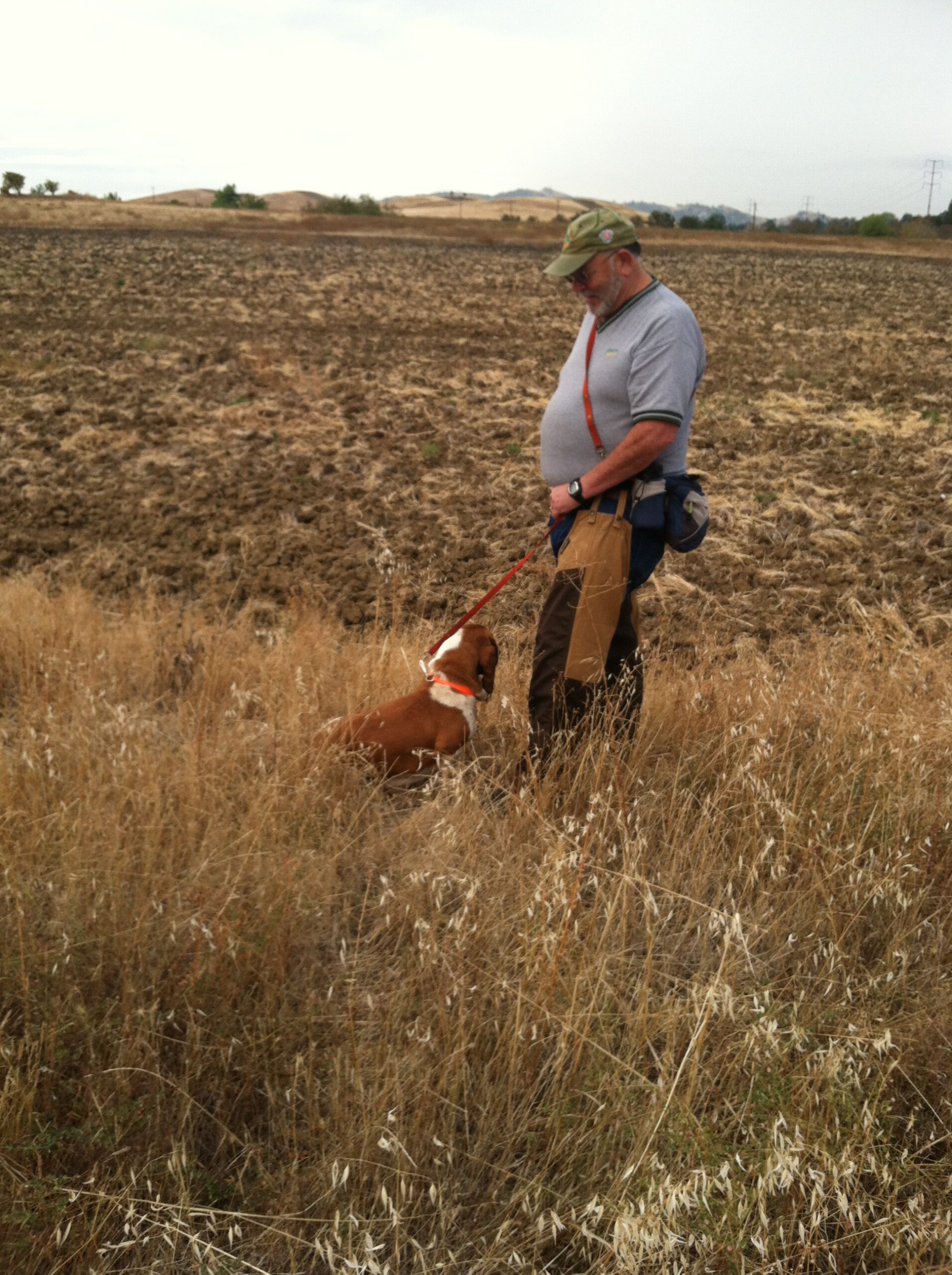
We all know that our Basset Hounds have a distinctive appearance. Some may be surprised that the reason Bassets look the way they do is that they were bred to be incredible hunters of small game, primarily rabbit or hare. Many of their distinctive features were selected for in breeding programs to enhance their hunting ability and the ability to be followed on foot. There is no greater joy than seeing or hearing good running Basset Hounds on a scent. Hounds and their handlers both enjoy this fascinating sport.
The Basset Hound Club of America was formed primarily by Field Trial enthusiasts in 1935. Shortly after the BHCA was organized, members held field trials in Michigan and in Pennsylvania. It wasn’t long until two trials a year were conducted in Michigan, Ohio or Pennsylvania. Today, many Field Trials are run primarily in the East, Midwest, Northwest and West regions by local Basset Hound Club of America member clubs. There are usually two BHCA National Field Trial events each year, one in the spring and another in the fall.
To find a Basset Hound Field Trial, search the Events Calendar. Even if you don’t compete, it is something every Basset Hound owner should see.
Who may Participate?
- Basset Hounds with AKC Full or Limited Registration
- Dogs at least 6 months of Age
- Spayed or Neutered Bassets
- Bitches in Season (may compete with Bitches)
Who May Not Participate?
- Dogs with PAL Numbers

Get the latest BHCA Field Trial information at the Basset Babbler!
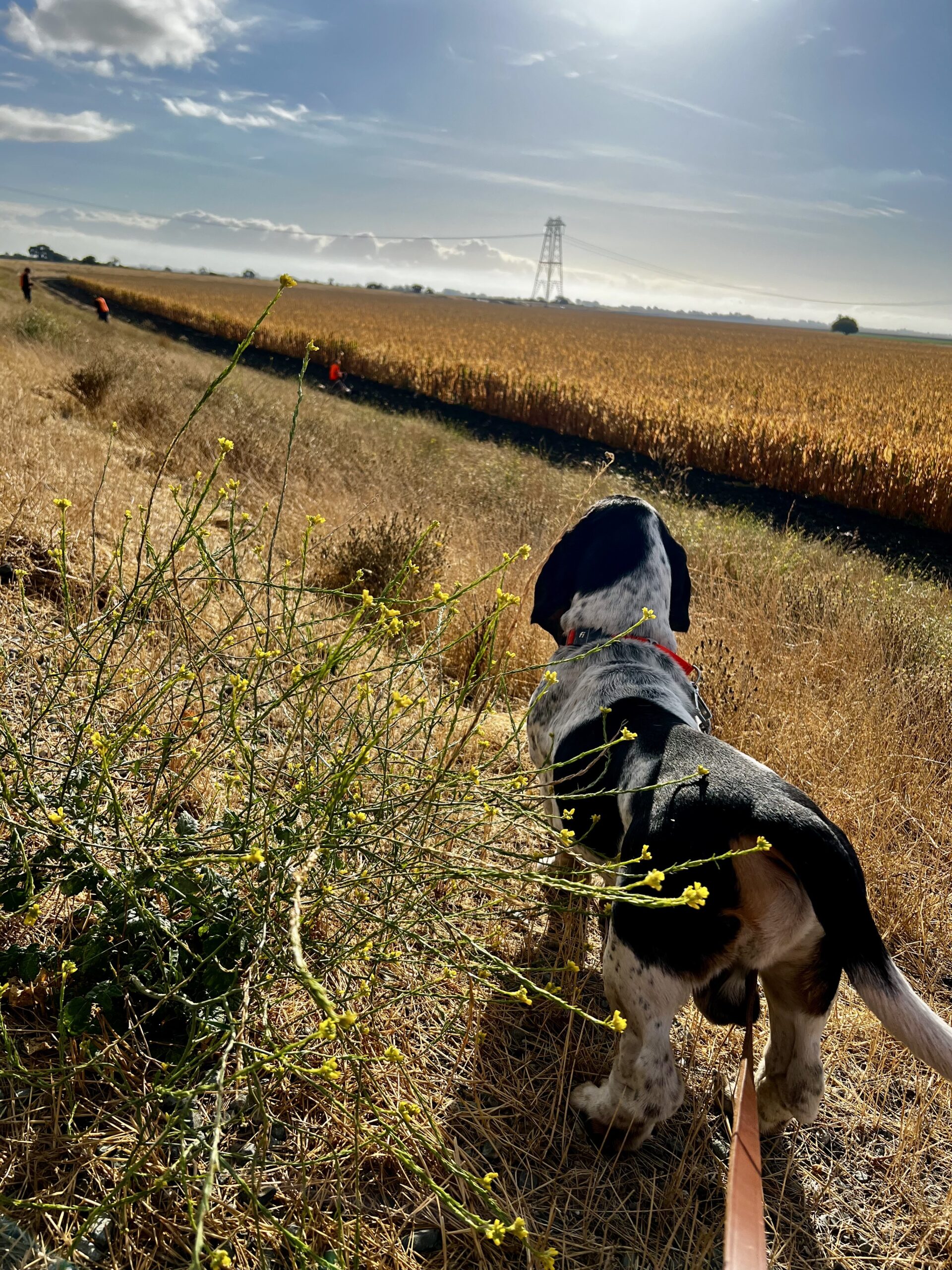
Basset Hound Field Trials are governed by the American Kennel Club Field Trial Rules and Standard Procedures for Basset Hounds. As with all AKC Events, it is a great idea to read the rules and regulations to fully understand how field trials are held and judged. You can download it from the AKC website at www.akc.org.
A premium list will be available with the Field Trial details and an entry form. Entries for Field Trials are normally done the day of the trial, before the draw. Newbies are welcome and encouraged to participate. Most experienced attendees will be happy to answer questions and lend assistance.
Field Trials are run under one of three procedures:
- Brace on Rabbit or Hare
- Small Packs on Rabbit or Hare
- Large Packs on Hare
How does a Field Trial work?
On the morning of the Field Trial, entries are presented to the Field Trial Secretary and a draw is held. Depending on whether the trial is brace, small pack or large pack, the procedure may vary slightly. For this explanation, we are assuming this is a Field Trial running Brace.
Once the draw is held, those who have dogs in the first brace will take them to the field at the judges’ direction. Generally, the next brace in line will be nearby, ready to proceed after the first brace is done. After all the braces have been judged, the dogs will be brought back for second series in the order the judges feel they placed with the exception that an identical brace cannot run together again. There may be another call back if necessary.
In addition to the Judges, there will be a “Marshal(s)” (depending on the procedure used) who will assist the judges, and maintain control of the Gallery. The Gallery normally “Beats the Brush” to help in finding a rabbit for the brace or pack competing. A spotter(s) will mark the entry point into the brush where a rabbit was seen.
Whoever sees a rabbit will signal “Tally Ho” and let the judges and handlers know where the rabbit went, without interfering with the line or the hounds.
Hounds normally are fitted with brightly colored collars, different than their brace-mate, so the judges are able to tell the dogs apart. The Bassets should find game, pursue it decisively and show determination.
Hounds may be cast to search for game, or placed on a line. Once dogs are down (have been cast or placed on a line), their handlers may not talk to them.
Classes
The regular classes are Open All-Age Dogs and Open All-Age Bitches. If when entries close, there are less than six entries, the classes can be combined and run with both sexes in a single class.
There is a non-regular Champion Class, for dogs and bitches who have their Field Champion Title. Sometimes, a Derby Class is offered, for Basset Hounds who have not yet turned two years of age.
Judges may place Bassets first, second, third and fourth in each class. (They may withhold awards for lack of merit). After fourth place is awarded, judges may select a NBQ, Next Best Qualified.
What does it take to acquire the title, Field Champion?
To complete a Field Championship, a Basset Hound must have placed in Open All Age classes at eight or more trials and have placed 1st in at least two and have won a total of 60 championship points in classes which have had six or more entries.
Points are awarded as follows:
- First Place – 1 point for each starter (competitor)
- Second Place – ½ point for each starter
- Third Place – 1/4 point for each starter
- Fourth Place – 1/8 point for each starter
(Starters are entered, eligible hounds that have not been disqualified).
A Field Champion may be designated as a “Dual” Champion if it has also been awarded Champion of Record (Conformation). A dog who has excelled and is also an Obedience Trial Champion, Champion Tracker and MACH (Master Agility Champion) may be designated as a “Triple Champion.”
What do judges look for?
Desirable Qualities that the Bassets should show in the field are:
- Searching ability
- Aptitude to recognize promising cover and the desire to explore it.
- Pursuing ability
- Proficient control of the trail, while making progress.
- Accuracy in trailing
- Following a trail with minimal weaving.
- Proper use of voice
- A dog should proclaim all finds, note progress by giving tongue and maintaining quiet when not in contact with the trail.
- Endurance
- The ability of the Basset to go as long as necessary without giving up.
- Adaptability
- A Basset Hound should be able to adjust to changing conditions and work with running mates.
- Patience
- The Basset should show a willingness to work through any problem encountered.
- Determination
- The Hound should persevere against all odds.
- Independence
- The ability to be reliant on his own, not influenced by faulty hounds.
- Cooperation
- The Basset should work harmoniously with its running mate.
- Competitive Spirit
- Desire to outdo its running mate while maintaining control and focus.
- Intelligence
- An intelligent hound learns from mistakes and adapts to changing conditions.
Faulty Actions that you hope not to see are:
- Quitting
- Backtracking
- Ghost trailing
- Pottering
- Babbling
- Swinging
- Skirting
- Leaving checks
- Running Mute / Tightness of mouth
- Racing
- Running hit or miss
- Lack of Independence
- Bounding off
I need assistance in getting more information about Field Trials. What can I do?
If you need assistance in getting more information about field trials, contact:
FTAC Chair, Ben Marley benmarley3@gmail.com
Join in the fun and try Field Trials!
Don’t be intimidated. Look for a BHCA Member Club in your area and inquire about field trials. Join the gallery for the first one and enjoy your day. You’ll meet wonderful, dedicated people, some fabulous Basset Hounds and may become interested in learning more about this terrific event.
If your Basset has a PAL number and isn’t able to Field Trial, you might consider the Hunting Performance Test.